Beschrijving
Jean-Paul Fitoussi
Engels
gebonden
Economie
Direct leverbaar
Palgrave Macmillan UK
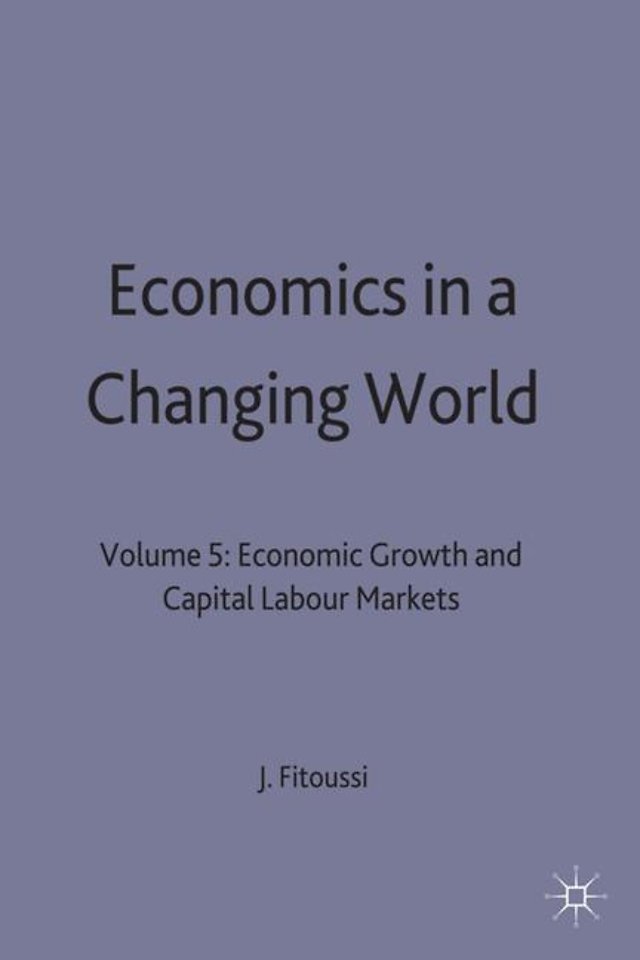
Growth patterns have changed radically over the last two decades, to which capital and the labour markets appear to have failed to adapt. Unemployment in Europe has been growing, almost without remission, to levels unseen since the Great Depression. These facts are somewhat at odds with the development of growth theory which has mainly been orientated towards an equilibrium full employment framework. The main message of equilibrium theory of fluctuations was precisely that the policy maker is impotent. Now, with the universal acceptance of endogenous growth theory, the common concensus proposition would be `we are all neo-classical for the short run and Keynesian for the long run’ (investment being too important for growth to be left entirely in private hands).
Growth patterns have changed radically over the last two decades, to which capital and the labour markets appear to have failed to adapt. Unemployment in Europe has been growing, almost without remission, to levels unseen since the Great Depression. These facts are somewhat at odds with the development of growth theory which has mainly been orientated towards an equilibrium full employment framework. The main message of equilibrium theory of fluctuations was precisely that the policy maker is impotent. Now, with the universal acceptance of endogenous growth theory, the common concensus proposition would be `we are all neo-classical for the short run and Keynesian for the long run’ (investment being too important for growth to be left entirely in private hands).
Growth patterns have changed radically over the last two decades, to which capital and the labour markets appear to have failed to adapt. Unemployment in Europe has been growing, almost without remission, to levels unseen since the Great Depression. These facts are somewhat at odds with the development of growth theory which has mainly been orientated towards an equilibrium full employment framework. The main message of equilibrium theory of fluctuations was precisely that the policy maker is impotent. Now, with the universal acceptance of endogenous growth theory, the common concensus proposition would be `we are all neo-classical for the short run and Keynesian for the long run’ (investment being too important for growth to be left entirely in private hands).